Loving Astrid: A Sweet, Classy Script Font for Handmade Brands
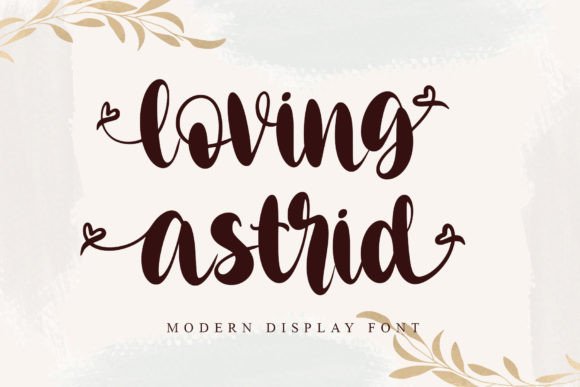
As someone who hand-labels small-batch candles, designs wedding invitations for local couples, and creates printable planner pages sold on Etsy—I know how much a single font can shape how customers *feel* about your work. Loving Astrid isn’t just another script font. It’s a fresh, handcrafted typeface with gentle curves, balanced spacing, and that rare blend of sweetness and sophistication. It doesn’t shout—it invites. And that quiet confidence makes it ideal for makers who want their physical products and digital downloads to look intentional, elevated, and unmistakably *theirs*.
Loving Astrid lives in the Script Amp category, which means it’s built for impact—not long paragraphs. Think of it as your go-to display font for moments that need warmth and personality: a boutique tag tied around a soap bar, the “Welcome” on a rustic wedding sign, or the name on a custom mug for a baby shower. Its lowercase letters flow like inked cursive, while capitals carry subtle flair—just enough swash to catch the eye, never so much that it compromises readability at small sizes. I tested it at 12 pt on matte sticker paper (for mini gift tags), and every letter cut cleanly on my Cricut Maker—no tangled loops or fragile terminals.
Where Loving Astrid shines is in consistency across product lines. If you sell seasonal goods—say, lavender honey jars in spring and spiced cider labels in fall—using Loving Astrid for both keeps your brand visually cohesive. Customers begin to associate that graceful, modern script with your shop’s tone: thoughtful, handmade, quietly confident. I’ve used it for handwritten-style bakery labels (paired with a crisp sans serif for ingredients), foil-pressed wedding suite envelopes, and even vinyl decals for ceramic mugs—each time, it held up beautifully in mockups and in real life.
It’s especially effective for short, high-impact text: names, titles, slogans, and decorative phrases. “Hand-poured,” “Est. 2022,” “You’re Invited,” “Small Batch • Big Love”—these all sing in Loving Astrid. It’s not designed for body copy, and that’s by design. Let it do what it does best: elevate the first thing people see. For longer text—like event details on an invitation or care instructions on a product tag—I pair Loving Astrid with a clean, neutral sans serif (think Montserrat or Inter). That contrast gives hierarchy without clutter, and it’s a pairing that works equally well on printed cards and digital templates.
For SVG creators and Silhouette users, Loving Astrid includes OpenType features that matter: standard ligatures, contextual alternates, and optional swashes. These aren’t just flourishes—they’re functional. The “&” ligature connects smoothly; the “Th” and “st” pairs avoid awkward collisions; and the swash capitals add polish to title treatments without manual tweaking. All files come in OTF and TTF formats, compatible with Design Space, Cricut Access, Silhouette Studio, Canva Pro, and Adobe apps. No multilingual glyphs are included, so it’s best suited for English-language branding and product labeling—but that’s where most small craft businesses focus anyway.
I’ve used Loving Astrid across six very different projects this season—and each time, it delivered something consistent: clarity, charm, and commercial readiness. On kraft paper gift tags? Crisp and warm. On glossy sticker sheets for planner stickers? Sharp, with no bleeding. As the main font in a printable “Thank You” wall art PDF? Elegant but approachable—no stiff formality. Even scaled down to 8 pt for tiny jar labels (with bold weight for emphasis), it remained legible under natural light and in photos shared on Instagram.
Practical tip: Always test Loving Astrid at your *smallest intended size* before cutting or printing. For die-cut stickers under 1”, stick to uppercase or simplified words—“Joy,” “Love,” “Home.” Avoid thin swashes there. For larger applications—farmhouse signs, canvas tote prints, or welcome boards—lean into its full character set. Use the alternate “a” or “g” for visual interest in headlines, and let the default lowercase shine in softer contexts like baby announcements or tea box labels.
Font pairing is where Loving Astrid becomes even more versatile. Try it with a sturdy, low-contrast serif (like Lora) for vintage-inspired stationery—or a geometric sans (like Poppins) for modern apothecary packaging. The key is contrast in structure, not contrast in mood. Loving Astrid is sweet but never childish; modern but never cold. So avoid overly playful or ultra-thin companions. Let it lead, and choose supporting fonts that ground—not compete.
And yes—this is a commercial font, fully licensed for use in physical products, digital downloads, SVG files, client work, and print-on-demand items. That means you can embed Loving Astrid in Canva templates you sell, use it in editable PowerPoint invitation kits, or apply it to t-shirt designs uploaded to Printful—no extra fees or attribution required. Just keep your license active and respect the terms: no reselling the font files themselves, and no uploading them to free font sites.
If you’ve been reaching for the same overused script font for three seasons straight—or worse, avoiding script altogether because nothing feels both beautiful *and* buildable—Loving Astrid is worth pausing for. It’s not flashy. It’s not trendy in a fleeting way. It’s a steady, reliable tool: the kind of font that makes your candle label feel special, your wedding invite feel personal, and your Etsy shop feel like a place customers want to return to—not just once, but again and again.